The answer — one pick, priced
Get the
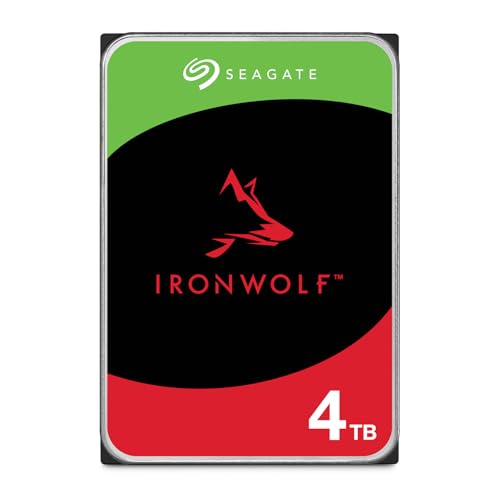
Seagate IronWolf 4TB
$60 under your budget
The cheapest CMR NAS drive still in stock across 15 sources — the honest entry point for a 1-2 bay box when the 8TB tier costs $259 a drive.
Fit ledger — need → measured evidence
■ The catch — co-equal billing, always
You are paying a shortage tax per terabyte. At ~$48/TB this is among the worst value on the card, and its 64MB cache is the smallest here. You buy it because $190 is the money you have, not because 4TB per bay is the smart 2026 build.
Dealbreaker? Red Plus 8TB is ~$32/TB if you can reach $259 ↓
■ Every product has a catch. Verdicts that hide it are how bad buys happen.
Don't buy this if…
- you need a NAS device (enclosure), not drives to put inside onenas devices home dossier →
- you need an external portable hard drive for backupsexternal hard drives dossier →
Wrong product for you is still a bad buy. These are the cases where we'd send you somewhere else.
Runners-up — if your needs differ


Adjacent verdicts — other needs, same method
Different budget, different household, different job — each of these is already researched, priced and verified. Take the one that matches your need.
Traps — this verdict avoids
Why the Seagate IronWolf 4TB is right for you
It avoids every trap below — and for just me, under $250, it is the pick because it delivers:
The name is not the spec
WD Red (non-Plus, non-Pro) is an SMR drive despite the NAS branding, and SMR stalls or fails outright during a RAID rebuild. Only WD Red Plus and WD Red Pro are CMR. All 15 drives here were checked against the manufacturer datasheet, never the listing title.
Renewed is not a discount
A Renewed Ultrastar HC580 24TB lists at ~$669 (~$28/TB) against ~$799 new — but the warranty drops from WD's 5 years to 90 days-2 years of third-party cover, with undisclosed prior power-on hours. Never price a recertified drive as if it were new.
One lot, one failure mode
Buy an array's drives from different batches, and enable SMART plus scheduled scrubs. Backblaze's 2025 fleet failure rate is a record-low 1.36% across 344,196 drives, but a correlated double failure during a rebuild is still how home arrays lose data — and RAID is not a backup.
Provenance — 15 sources, dated
Winners are picked from the full research dossier at knowledgelib.io. Prices, stock and listings are re-verified monthly.